

Introduction

What is Permanent Pacemaker (PPM)?

The heart rhythm is primarily controlled by its conduction system. Any abnormality in this system may lead to arrhythmias. In particular, bradyarrhythmias (abnormally slow heart rhythms) can cause symptoms such as dizziness, syncope (fainting), heart failure, or in rare cases, sudden cardiac death.

A Permanent Pacemaker (PPM) is an implantable device designed for the long-term management of bradyarrhythmias. The pacemaker consists of a battery-powered pulse generator and one or more leads that connect to the heart. When the heart rate drops below a preset level, the pacemaker sends electrical impulses to stimulate the heart, maintaining an appropriate heart rate. It is the only effective long-term treatment for bradyarrhythmia.

Causes

Causes

Bradyarrhythmias (slow heart rhythms) can be caused by:
  • Aging-related degeneration of the heart’s conduction system
  • Heart diseases such as myocardial infarction (heart attack) or cardiomyopathy
  • Certain medications that affect electrical conduction in the heart
  • Congenital abnormalities in the conduction system
  • Previous cardiac surgeries or procedures
Symptoms

Symptoms

Symptoms of bradyarrhythmias may include:
  • Dizziness or lightheadedness
  • Syncope (fainting)
  • Fatigue
  • Shortness of breath
  • Confusion
  • Heart failure symptoms such as swelling of the ankles or legs
  • In rare cases, sudden cardiac arrest
Operation

The Permanent Pacemaker (PPM) Implantation Procedure

This procedure is performed in the Cardiac Catheterization and Intervention Laboratory (CCIL) under local anesthesia. You will remain awake but may receive sedation to help you relax.

  • Electrodes will be placed on your chest to monitor heart rhythm.
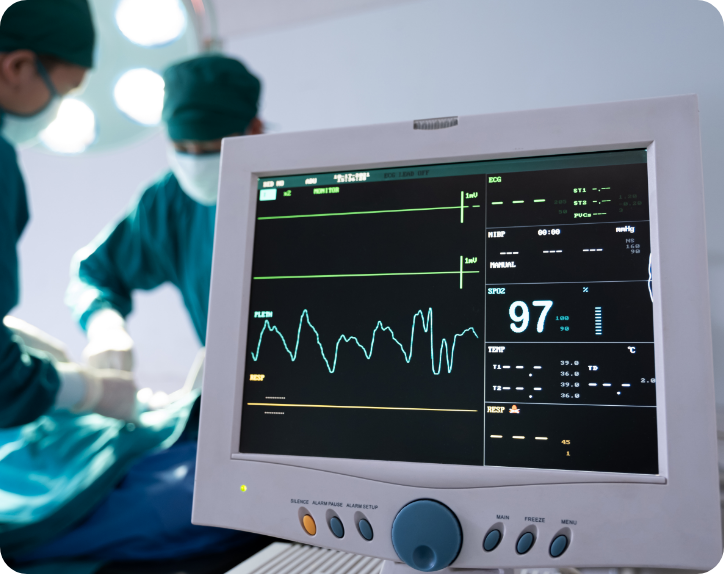
  • A blood oxygen sensor will be clipped to your finger, and your blood pressure will be monitored.
  • The skin around your left (or occasionally right) clavicle will be disinfected.
  • A small incision (about 3–5 cm long) will be made beneath the clavicle.
  • Contrast dye may be injected to visualize veins in the arm, and a needle puncture will be made under the clavicle to access the vein.
  • One or two leads will be advanced into the heart chambers under X-ray guidance.
  • The pulse generator will be connected to the leads and implanted in a pocket beneath the skin or muscle.
  • The wound will be closed with sutures and covered with a pressure dressing.
  • The procedure typically takes 2 to 3 hours.
Notice

Postoperative Care

  • You may be discharged 1–2 days after the procedure.
  • The wound will be covered with a dressing; keep it clean and dry. You may shower after 7 days.
  • If stitches are not dissolvable, return for suture removal 1 week after surgery.
  • Remove dressing 2–3 days after suture removal.
  • Avoid lifting the affected arm above shoulder level or vigorous arm movement for 4 weeks.
  • Regular follow-up for pacemaker checks, programming, and battery monitoring is required.
  • Always carry your pacemaker ID card.
  • Avoid strong electromagnetic or radiofrequency fields. Keep mobile phones at least 15 cm (6 inches) away from the pacemaker.
  • Most household electronics do not affect pacemaker function.
  • The battery typically lasts 5–10 years; generator replacement is needed when depleted.

For further information, please consult your attending doctor or cardiologist.

The above information is for reference only. As each patient’s condition may vary, please consult your doctor for individual assessment and advice.